Introducing synapse™

The design platform for complex engineering systems

Design, verify, and automate complex systems design in one shared workspace - with full traceability from design to manufacturing.

THE PROBLEM

Coordination overhead is slowing down engineering.

Modern engineering programs involve multiple teams, tools, suppliers, and disciplines. As projects evolve, system information spreads across models, spreadsheets, documents, scripts, and email threads.

With every iteration:

  • Updates propagate slowly
  • Documents fall out of sync
  • Decisions are made on partial information
  • Inconsistencies are discovered too late

There is no unified digital backbone connecting the design, its data, and its workflows.

As complexity increases, coordination becomes the bottleneck — leading to delays, rework, and avoidable risk.

Fragmented tools

System data lives across disconnected tools, documents, and spreadsheets, with no shared structure.

Limited visibility

Design decisions, assumptions, and evidence are difficult to locate when needed.

Broken traceability

Links between requirements, design elements, analyses, and tests are incomplete or outdated.

Manual iteration

Design changes require manual updates across models, documents, analyses, and reports.

Workflow without synapse™

THE SOLUTION

One connected engineering workspace

synapse™ keeps your system model, requirements, documentation, and workflows connected - so change stays auditable and collaboration stays fast.

synapse logo

Design Effort

Reduced by

x1

Engineering at the speed of software through model-centric design, git-like version control and reusable engineering logic.

Iteration Time

Reduced by

0%

Automated workflows reduce turnaround between changes, verification and documentation generation

Time to operational readiness

Reduced by

0%

Reduced manual coordination translates into faster progress to stable and production-ready systems

BUILT FOR

Space
Defense
Railway
Aeronautical
Energy
Medical Devices
Quantum Computing
Automotive
Space
Defense
Railway
Aeronautical
Energy
Medical Devices
Quantum Computing
Automotive

Model-based systems engineering

Powerful SysMLv2 modeling without the complexity of heavyweight MBSE tools.

  • Model physical systems with hierarchical product and system breakdowns.
  • Define parts, attributes, and interfaces in one connected model.
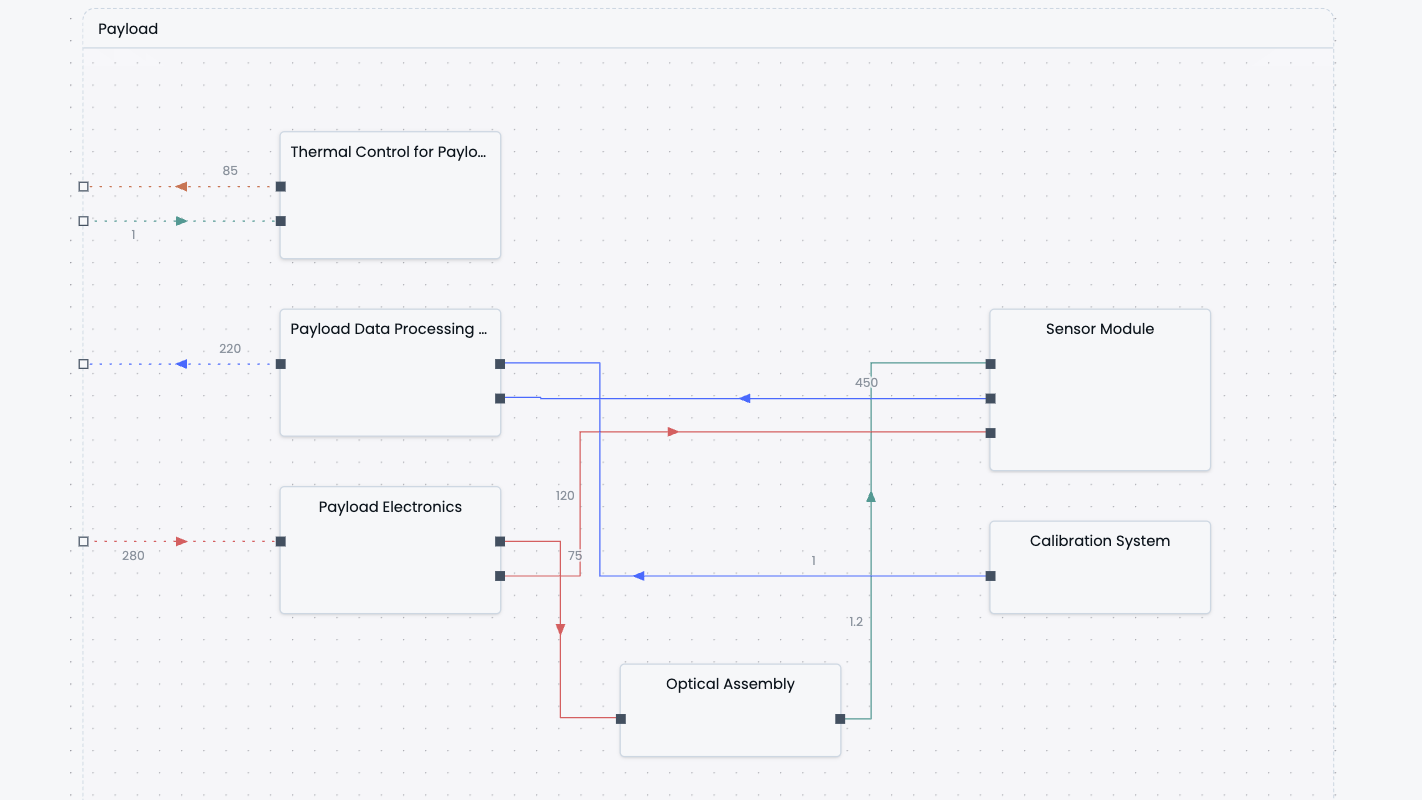
  • Auto-generate architecture diagrams directly from model data.
  • Keep model data linked to requirements, documentation, and automation workflows for real end-to-end traceability.

Requirements management

Manage requirements as structured, versioned data linked to the system model.

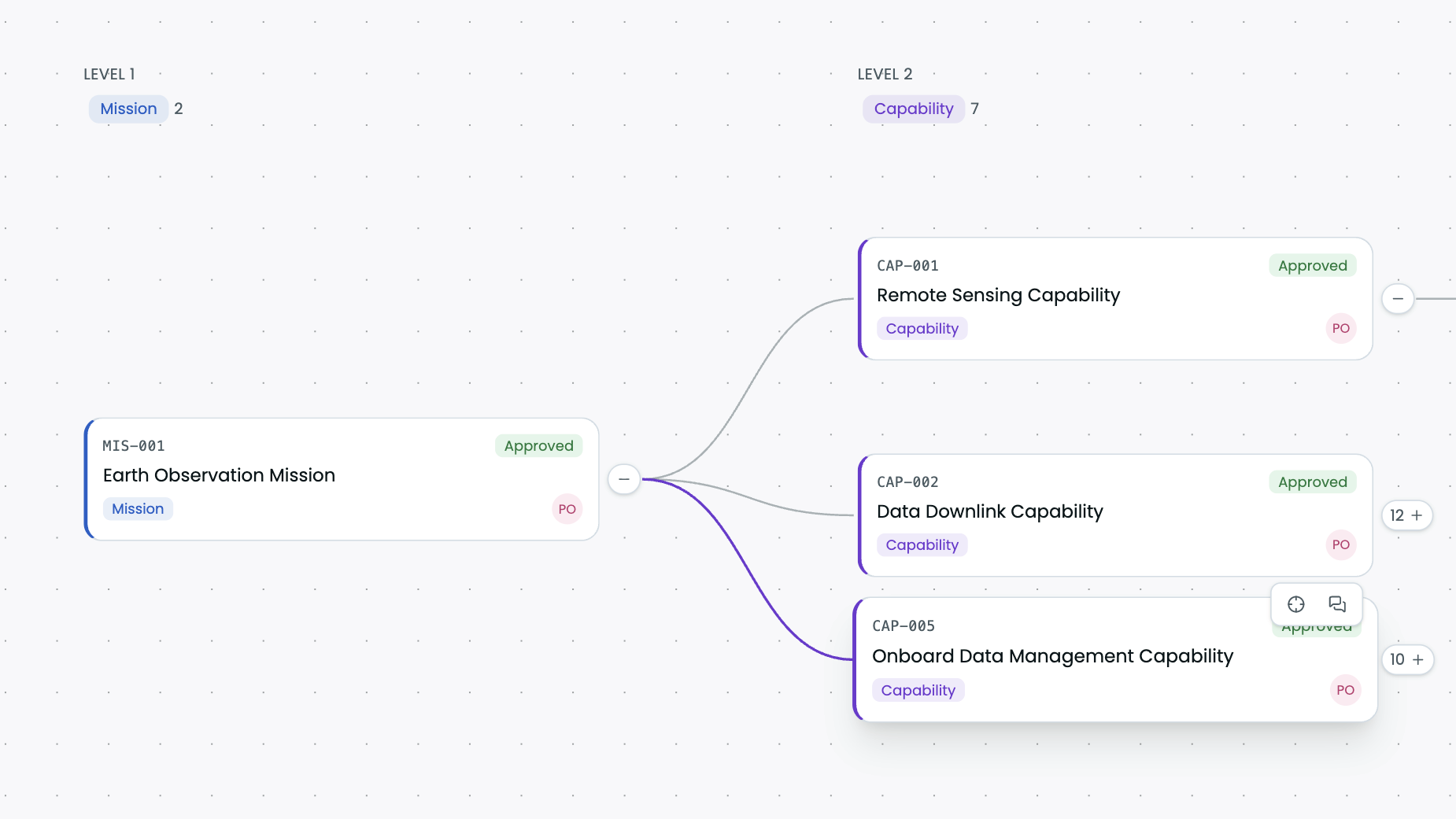
  • Organize requirements in a hierarchical breakdown structure.
  • Store and track changes to statements, IDs, statuses, and custom fields.
  • Link requirements to system parts, attributes, interfaces, and documents, and define verification rules.
  • Navigate requirements in the tree view and create custom table views for reviews.

Documentation management

Manage project documentation as part of the engineering context.

  • Store documents in a structured repository connected to your documentation provider.
  • Link documents to requirements, system elements, attributes, and interfaces.
  • Use documents as sources of values and as verification evidence.
  • Automatically generate reports and deliverables from current model and requirement data using workflows and custom docx templates.

Workflow automation

Build powerful workflows to harness your model data for automation and repeatable verification.

  • Build workflows to automate budgets, documentation, and controlled model updates.
  • Connect simulations, repositories, and custom tools to centralize execution in synapse™.
  • Keep execution history to track, debug, and trace previous runs.
  • Plan workflows on attribute changes and schedules with repeat options.

Version control & concurrent design

Track changes across model, requirements, and documents and ship with confidence with automated pipelines.

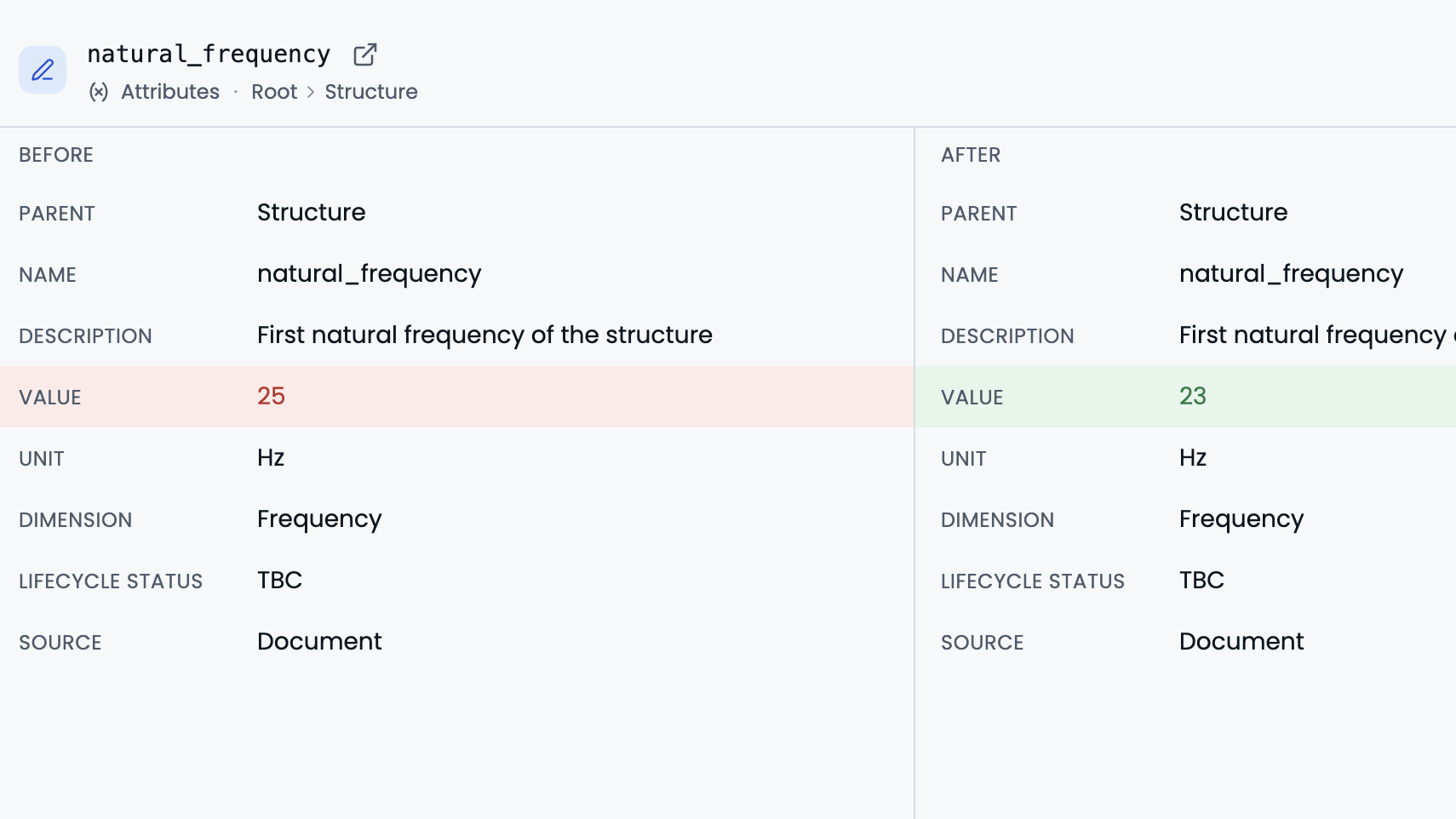
  • Track changes to model parts, attributes, interfaces, and requirements.
  • Review detailed differences before accepting changes.
  • Explore version history and create project clones as new revisions.

Concurrent design & regression-proof pipelines

Build CI/CD-style pipelines with requirement verification to prevent regressions as multiple teams iterate concurrently.

BACKED BY

ESA BIC logo
Microsoft logo
NVIDIA logo
ACCIO logo

Let's chat.

Accelerate your business.

Be part of the future of systems engineering.

Send us a message

Tell us more about your company

0 / 1000