01 · Product
Architecture
Stop describing the same system in five places.
Today the mass budget is a spreadsheet, the interfaces are an ICD, and the block diagram is a slide that stopped being true a month ago. In synapse™ the parts, the interfaces between them and the values that describe them are one model, and requirements, verification, workflows and documents all point back at it. You work in trees and tables. The SysML v2 model is built underneath, and you never have to write a line of it.
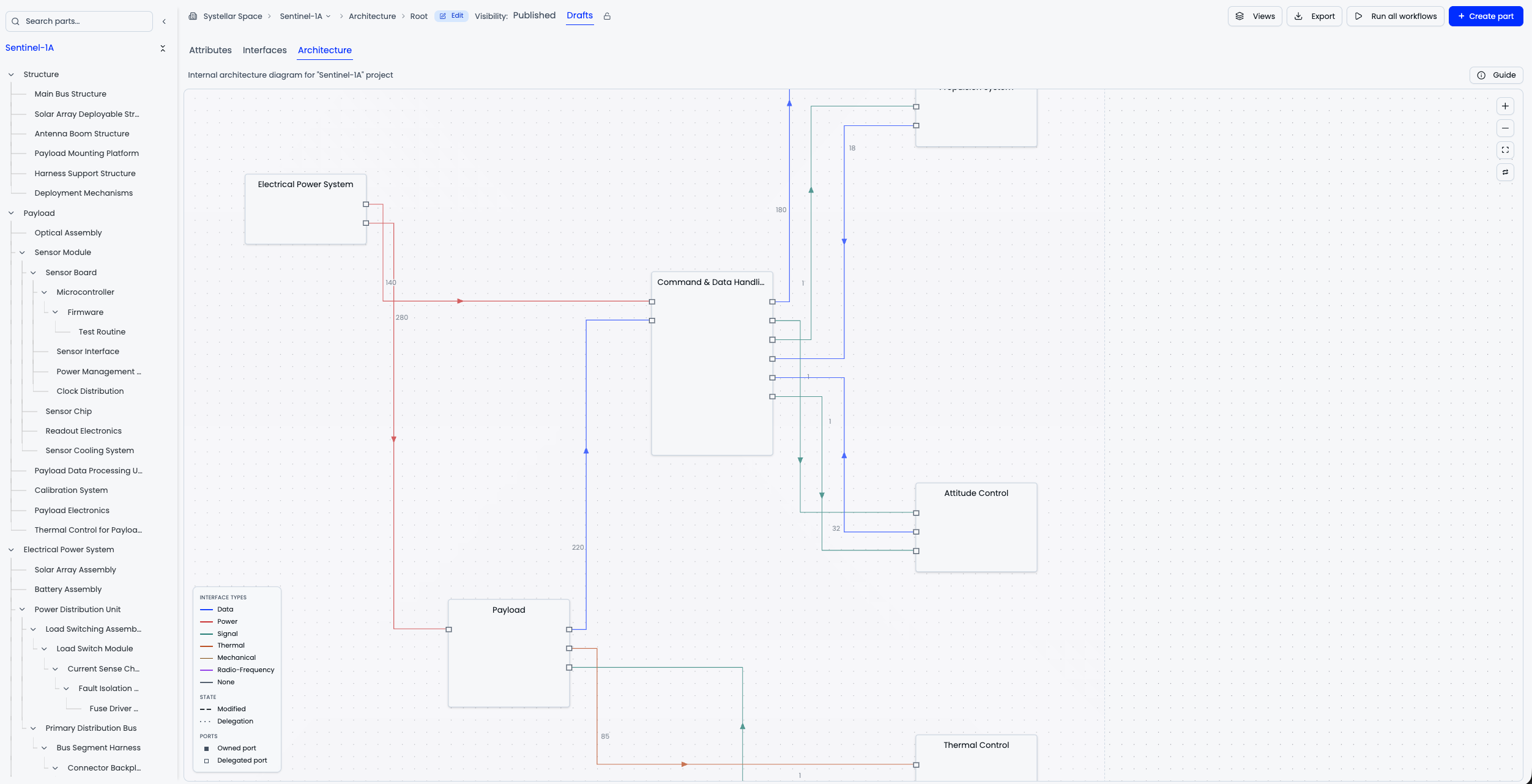
The part hierarchy of a spacecraft project beside its architecture diagram, rendered from the interfaces in the model.
- Full description of the system architectureSubsystems down to components, where each one connects, and what passes between them. The ICD becomes a view of the model rather than a document someone maintains.
- Every number has a provenanceA mass on a part says whether someone typed it, which datasheet it came from, or which calculation produced it. Nobody has to ask where the figure in the budget came from.
- The diagram is never out of dateThe diagram is a view of the model, not a slide. A new interface is on it the moment it exists, and there is no second artefact to keep in sync.
- SysML v2 underneathThe model is standards-compliant SysML v2 the whole way down. It leaves as a .sysml file whenever you want it to, so nothing is locked inside synapse™.
Attributes that recompute when the design moves
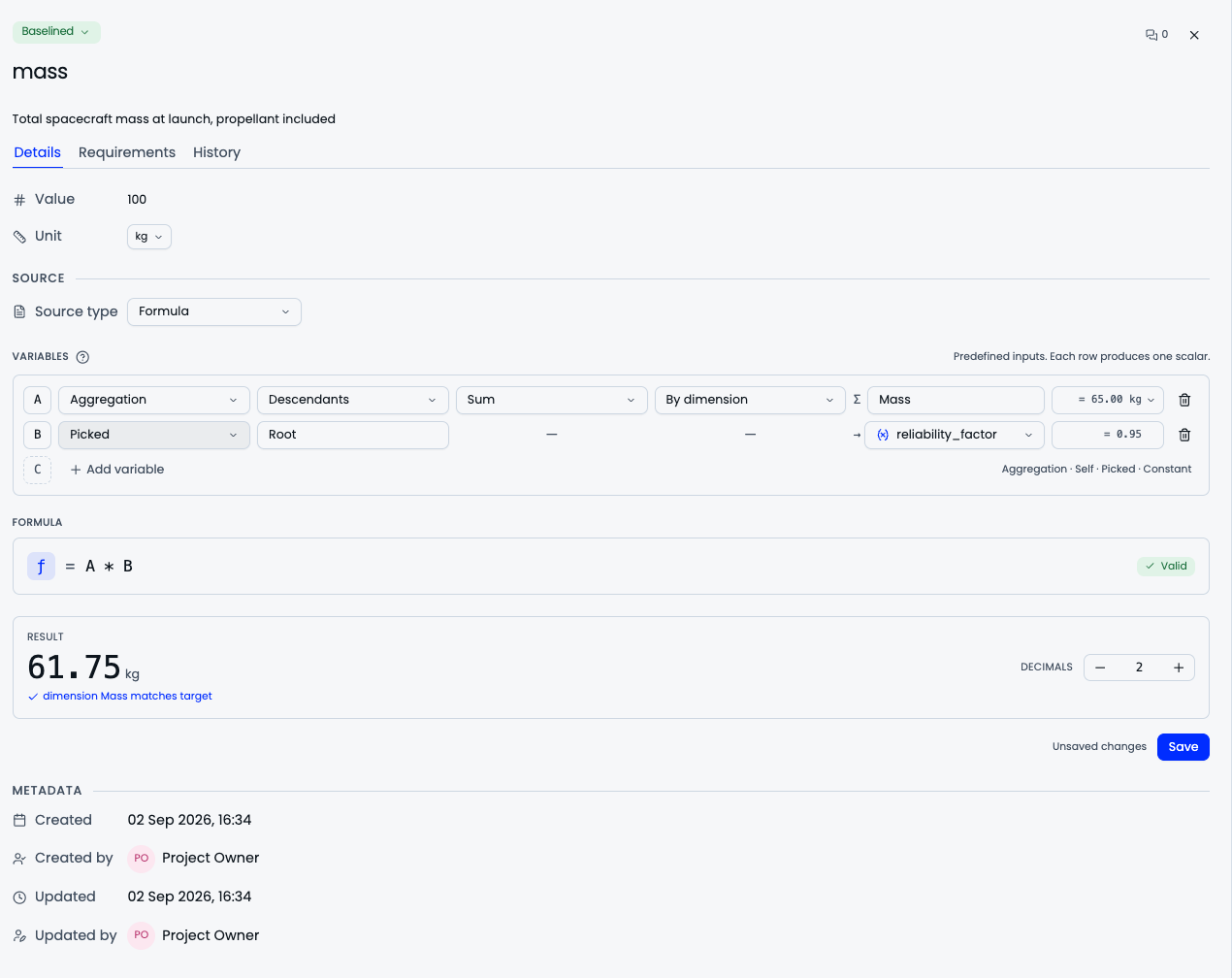
With formulas and workflows system attributes update dynamically with changes. From simple mass aggregations to complex python simulations, system attributes are live data, not numbers copied into a spreadsheet.
Interfaces that describe how the system is connected
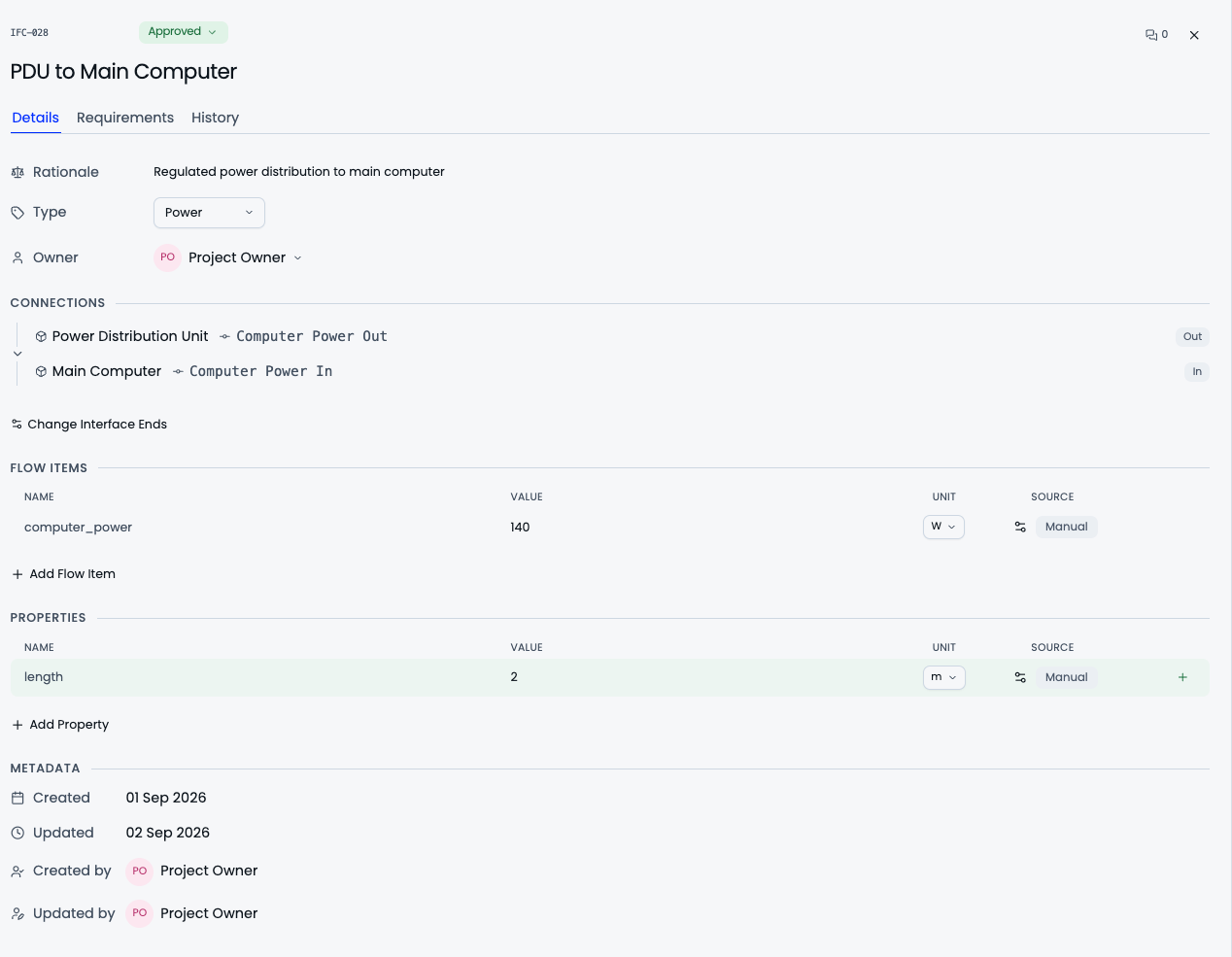
Power from the PDU to the flight computer is an interface in the model, not a line in an ICD. It knows which ports it joins, how much current crosses, and what the harness weighs. When the power team changes it, the computer team sees the change on their side of the same record, and the diagram redraws itself because it was never a drawing in the first place.